

Here’s the simple truth: all bourbon is whiskey, but not all whiskey is bourbon.
Think of whiskey as the entire family of spirits, and bourbon as a specific, legally-protected member of that family—much like champagne is a specific type of sparkling wine. Getting this distinction down is the key to understanding one of America's most celebrated spirits.
Unpacking the Whiskey Family Tree
If you're new to the spirit world, the terms "bourbon" and "whiskey" can feel interchangeable. While they are related, the real difference comes down to a strict set of rules that govern how bourbon is made, giving it the title of "America's Native Spirit."
Whiskey is the broad category for any distilled spirit made from a fermented grain mash—like barley, corn, rye, or wheat—and then aged in wooden barrels. This global family includes Scotch from Scotland, Irish whiskey, Japanese whisky, and countless others from remarkable American craft producers. Bourbon, however, has to follow a very specific American recipe.
This legal framework is what gives bourbon its unique character and consistency. According to U.S. federal regulations, for a spirit to be called bourbon, it must meet several non-negotiable criteria, from its grain content to the specific barrels it's aged in. The spirit's popularity is booming, with the U.S. recently producing approximately 22.7 million 9-liter cases. If you want to dig into its growth, you can explore more bourbon market insights.
Bourbon vs Whiskey At a Glance
To quickly get a handle on the core distinctions, the table below breaks down the fundamental differences between bourbon and the wider whiskey category. It’s a handy reference as you begin your tasting journey.
| Attribute | Bourbon (A Type of Whiskey) | Whiskey (The General Category) |
|---|---|---|
| Origin | Must be made in the USA. | Produced worldwide (e.g., Scotland, Ireland, Japan). |
| Primary Grain | Must contain at least 51% corn in its grain mixture. | Varies greatly; can be barley, rye, wheat, or corn. |
| Barrel Type | Must be aged in new, charred oak barrels. | Can be aged in new or used barrels, including ex-bourbon or sherry casks. |
| Flavor Profile | Typically sweet, with notes of vanilla, caramel, and oak. | Varies widely from smoky and peaty (Scotch) to smooth and light (Irish). |
A simple tip for new drinkers: If you enjoy sweeter, richer flavors like caramel and vanilla, starting with bourbon is an excellent choice. Its corn-based recipe provides a more approachable and less intimidating entry point than some of the smokier or spicier whiskeys from around the world.
Having this foundational knowledge will help you navigate the whiskey aisle with more confidence, whether you're eyeing a classic Kentucky bourbon or an intriguing bottle from an up-and-coming American craft distillery. Now, let's dive deeper into the specific rules that make bourbon a uniquely American spirit.
The Legal Rules That Define Bourbon
What really sets bourbon apart from the global whiskey family isn't just tradition—it's the law. Back in 1964, the U.S. Congress officially declared bourbon "America's Native Spirit," creating a strict rulebook known as the Federal Standards of Identity for Distilled Spirits. These aren't just guidelines; they’re what guarantee every bottle with "bourbon" on the label meets a certain standard of quality and character.
While everyone knows about the 51% corn rule, that's really just the tip of the iceberg. These regulations are the legal backbone that protects bourbon's integrity and carves out its unique spot in the world of spirits. They’re non-negotiable mandates every single distiller has to follow.
The Foundation: Made in the USA
One of the biggest myths about bourbon is that it has to be made in Kentucky. It’s true that the Bluegrass State is a bourbon powerhouse, producing around 95% of the world's supply, but the only legal requirement is that it must be made somewhere in the United States. This simple rule cements its identity as a uniquely American product.
This has opened the door for an incredible craft distillery scene to pop up all over the country. You've got distilleries like Frey Ranch in Nevada and Southern Star in North Carolina making absolutely outstanding bourbons that reflect their local character while sticking to the federal laws. For anyone new to whiskey, this means you can explore a huge variety of American styles without ever stepping outside the bourbon category.
Tip for New Drinkers: Don't just look for Kentucky brands. Ask your local shop for a bourbon from your home state or another region you're curious about. You might just find a new favorite while supporting a smaller, local producer.
The Distillation and Aging Mandates
Beyond its American roots, the production process is also tightly controlled. These rules are all about managing the spirit’s flavor from the moment it comes off the still to the day it goes into the bottle.
The regulations zero in on two key stages: distillation and barrel entry.
- Distillation Proof: The spirit can't be distilled any higher than 160 proof (80% alcohol by volume). This is a huge difference from other spirits, which are often distilled to a much higher proof. Keeping the proof lower makes sure more of those flavorful compounds from the grain—the congeners—make it into the final product.
- Barrel-Entry Proof: The raw spirit, or "distillate," has to go into the barrel for aging at no more than 125 proof (62.5% ABV). This rule is critical because it controls how the spirit interacts with the wood, preventing it from getting overpowered by harsh, woody, or tannic notes.
These proof points weren't just picked out of a hat. They’re the result of generations of distillers figuring out the perfect balance between the raw character of the grain and the sweet, rich flavors pulled from the barrel.
New Charred Oak: The Secret to Bourbon Flavor
Maybe the single most important rule shaping bourbon's classic flavor profile is the one about the barrel. All bourbon has to be aged in new, charred oak containers. This one regulation is almost single-handedly responsible for the signature notes of caramel, vanilla, and toffee that bourbon drinkers know and love.
Unlike Scotch or Irish whiskey makers, who often reuse barrels that once held bourbon, sherry, or wine, bourbon distillers get one shot with each barrel. Once it's been used to age bourbon, it can't be used for bourbon again. This forces every drop of bourbon to draw its flavor and deep amber color from a fresh, virgin oak source.
This "new, charred oak" rule is precisely why used bourbon barrels are so valuable to the rest of the world's whiskey industry. The deep charring process caramelizes the sugars in the wood staves, and as the spirit ages, it dissolves those sugars, creating bourbon's characteristically sweet and smooth profile.
How Grain and Barrels Shape Flavor
The legal rules give bourbon its bones, but the real soul of the spirit—its flavor—comes down to two things: the grain that goes in and the barrels it rests in. The choices a distiller makes here are what create the incredible spectrum of tastes you’ll find in American whiskey. Getting a handle on this is the first step for any drinker trying to find a bottle they’ll truly connect with.
At the heart of any whiskey is its mash bill, which is just the distiller's grain recipe. For bourbon, the law dictates that recipe has to be at least 51% corn. That high corn content is the main reason bourbon carries its signature sweetness, loaded with notes of caramel, vanilla, and honey. It’s a welcoming foundation that makes it a fantastic starting point if you're new to the world of whiskey.
This infographic neatly summarizes the core rules that set the stage for bourbon's entire production journey.
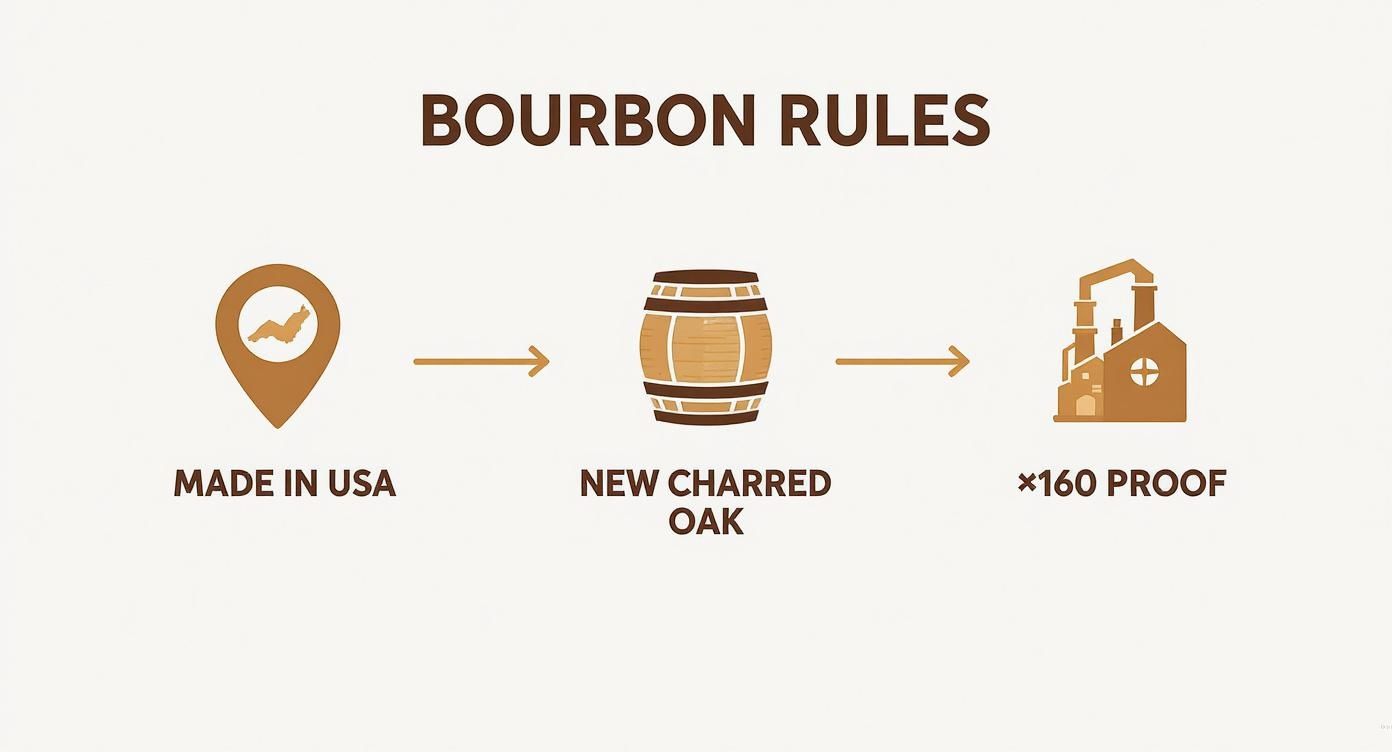
As the visual shows, the combination of being made in the USA, aged in brand-new charred oak, and coming off the still under 160 proof creates a remarkably consistent, high-quality spirit.
The Role of Secondary Grains
While corn lays down that sweet base, the remaining 49% of the mash bill is where distillers really get to play and build complexity. This is where the differences between bourbon and other whiskeys start to get crystal clear.
- Rye Whiskey: A whiskey made with at least 51% rye is a whole different animal. Rye brings a bold, spicy punch with notes of black pepper, mint, and baking spices, leading to a drier, more assertive finish. Craft distilleries like Dad's Hat Pennsylvania Rye Whiskey are turning out phenomenal examples that really showcase this robust style.
- Wheated Bourbon: Some distillers swap out the spicy rye for wheat as the secondary grain. The result is a "wheated" bourbon, which is famous for being exceptionally soft and smooth on the palate. Wheat brings gentler notes of bread, honey, and cereal, making it a go-to for drinkers who want a less spicy experience. Wyoming Whiskey is a perfect example, crafting a wheated bourbon that’s both rich and incredibly easy to drink.
- Malted Barley: While barley is a supporting actor in most bourbons (used for its enzymes in fermentation), it’s the undisputed star of Scotch whisky. When barley dominates the mash bill, it can create flavors ranging from biscuity and nutty to the intensely smoky and peaty notes found in Islay Scotches.
Tip for New Drinkers: If you lean towards sweeter flavors like caramel corn, start with a classic high-corn bourbon. If you prefer things a bit more spicy or savory, a high-rye bourbon or a true rye whiskey will likely be right up your alley. To really get into the weeds on this, you can learn more about the bourbon grain bill and how it shapes the final taste.
The Power of New Charred Oak
The second, and just as critical, piece of the bourbon flavor puzzle is the legal requirement to age it in new, charred American oak barrels. This one rule is almost single-handedly responsible for bourbon's deep amber color and its trademark vanilla and caramel character.
When a new barrel is charred, the intense heat caramelizes the natural sugars in the wood. As the bourbon ages inside, it breathes—expanding into the wood in the summer heat and contracting in the winter cold. This process pulls all those delicious, caramelized compounds out of the wood and into the spirit. Because bourbon distillers can only use a barrel once, every single bottle gets the full, powerful impact of that fresh oak.
This is a world away from how many other whiskeys are made. Scotch and Irish whiskey are typically aged in used barrels, often casks that previously held bourbon. This imparts subtler, more layered flavors from the wood's past life. But for that bold, oaky sweetness that defines America’s native spirit, there's just no substitute for a brand-new, freshly charred barrel.
Now, let's take a look at how these grain and origin differences translate directly into the glass.
Whiskey Flavor Profiles by Primary Grain and Origin
This table provides a comparative look at how the primary grain and production location influence the typical tasting notes of different whiskeys.
| Whiskey Type | Primary Grain(s) | Common Flavor Notes | Example Craft Brand |
|---|---|---|---|
| Bourbon | Corn (51%+) | Caramel, vanilla, oak, honey, hint of spice | Wyoming Whiskey |
| Rye Whiskey | Rye (51%+) | Black pepper, baking spices, mint, dried fruit, drier finish | Dad's Hat Pennsylvania Rye |
| Scotch Whisky | Malted Barley (100%) | Varies by region: smoky, peaty, floral, fruity, nutty | (Varies Widely) |
| Irish Whiskey | Malted & Unmalted Barley | Light, fruity, floral, smooth, honey, cereal | (Varies Widely) |
As you can see, the base ingredient is the launching point for a whiskey's entire personality, guiding it towards the sweet, spicy, smoky, or smooth profile that distillers are aiming for.
Exploring the World of Whiskey Beyond Bourbon
Now that you have a handle on the strict American rules that define bourbon, it’s time for a world tour. While bourbon has a distinct, charismatic personality, it’s just one member of a huge global family. Getting to know the other key players—Scotch, Irish, Canadian, and Japanese whiskies—really helps you see where bourbon fits in and what makes each style so unique.
Putting it all in perspective is key. Bourbon’s popularity is through the roof, but it’s still a specific corner of a much larger market. The global bourbon whiskey market was recently estimated to be worth over $9.5 billion, but the entire global whiskey market was valued at over $84 billion. It's a clear sign that while bourbon is growing fast, most of the world is drinking something else. You can dig deeper into the bourbon market's place in the world to see the full picture.
Scotch Whisky: The Smoky Scottish Icon
When most people think of whiskey, they often picture Scotch. Produced exclusively in Scotland, its main ingredient is malted barley, and it has to be aged for at least three years in oak casks. What makes Scotch so famous is its incredible regional diversity.
- Single Malt Scotch: This is the purist's choice, made from 100% malted barley at a single distillery. Its flavor can be anything from light and floral (like those from Speyside) to intensely smoky and peaty (the calling card of Islay), all depending on where it’s made.
- Blended Scotch: This is a mix of single malts and grain whiskies from various distilleries. Blends are all about consistency and smoothness, which has made them incredibly popular around the globe.
The use of peat—decomposed vegetation burned to dry the barley—is what gives many Scotches that signature smoky, almost medicinal flavor. It’s a world away from bourbon's sweet, corn-driven profile.
Irish Whiskey: The Smooth, Triple-Distilled Spirit
Irish whiskey is often considered one of the most approachable styles out there, making it a fantastic next step for bourbon drinkers. It’s known for being exceptionally smooth, a quality often credited to its traditional triple distillation process (most bourbon and Scotch are distilled just twice).
Made in Ireland, it typically uses a mix of malted and unmalted barley and must be aged for at least three years. The result is a lighter, fruitier spirit with notes of vanilla, honey, and cereal, without the heavy smoke of many Scotches or the deep, oaky sweetness of bourbon.
Tip for New Drinkers: If you enjoy the smoothness of a wheated bourbon but want to try something less sweet, an Irish whiskey is a perfect choice. Its mellow, gentle character is very welcoming to a developing palate.
Canadian Whisky: The Light and Versatile Northerner
Canadian whisky carries a reputation for being light, smooth, and incredibly versatile, which has made it a bartender's favorite for cocktails. Historically, many Canadian whiskies have a high percentage of corn in their mash bills, but they often include a good amount of rye for flavor.
The rules up in Canada are much more flexible than in the U.S. There's no requirement for new barrels, and distillers have a lot more freedom to blend different aged spirits. This often leads to a final product that is exceptionally smooth and balanced, with a subtle spiciness from the rye.
Japanese Whisky: The Art of Balance and Harmony
Japanese whisky has absolutely exploded in popularity over the last two decades, celebrated for its meticulous production and incredible balance. The Japanese took their inspiration directly from Scottish methods, focusing heavily on single malts and blends.
What truly sets Japanese whisky apart is a cultural obsession with precision and harmony. Distillers are known for perfecting every last detail of the process to create delicate, complex, and refined flavor profiles. While some are smoky and others are light and floral, they all share an elegant balance that has won them countless international awards.
Stepping from bourbon into the world of global whiskies reveals just how much grain and geography can shape a spirit. For more on how American styles compare, check out our guide on the differences between Whiskey, Bourbon, and Rye.
A Beginner’s Guide to Tasting Whiskey
Knowing the difference between bourbon and whiskey on paper is one thing. Discovering it for yourself, in a glass, is where the real fun starts. When you shift from simply ‘drinking’ whiskey to actively ‘tasting’ it, you unlock a completely new level of appreciation for the spirit. It’s not about following a rigid set of rules; it’s about paying attention to what your senses are telling you.
The first step is simply to slow down. Before you take a sip, just give the whiskey a moment. This simple pause lets you engage with the spirit on a deeper level and begin to pick out the unique characteristics that distillers work so hard to create.
The Three Steps of Tasting
Tasting whiskey is a pretty straightforward process that you can break down into three simple phases. Using a proper glass, like a Glencairn, definitely helps concentrate the aromas, but honestly, any glass will work just fine when you're starting out.
- Look at the Color: Hold your glass up to a light source. The color—anything from a pale straw to a deep mahogany—can give you clues about its age and the type of barrel it rested in. Bourbon, since it’s aged in new charred oak, often has that rich, deep amber hue.
- Nose the Aromas: Give the whiskey a gentle swirl and bring the glass to your nose, keeping your mouth slightly open as you do. Inhale slowly. You're trying to pick up the individual scents. You might find classic bourbon notes like vanilla, caramel, and oak, or maybe the spicier hints of a rye whiskey.
- Taste the Flavors: Take a small sip and let it roll across your tongue. Notice the initial flavors that hit (the palate) and then what lingers after you swallow (the finish). Is it sweet? Spicy? Does it feel smooth or have a bit of a kick? Does that flavor stick around for a while or fade quickly?
Tip for New Drinkers: Don't get hung up on getting it "right." In tasting, there are no wrong answers. The whole point is just to figure out what you like. If you taste cherry and your friend tastes leather, you’re both correct.
Should You Add Water or Ice?
This is a classic debate. Adding a few drops of water, especially to higher-proof whiskeys, can be a game-changer. It lowers the alcohol concentration, which tames the burn and can "open up" the spirit, letting subtler aromas and flavors come to the surface. Ice, on the other hand, chills the whiskey. This can dull some of the flavors but also makes for a more refreshing sip. Experiment and see what you prefer—there’s no single right way to enjoy it.
Host Your Own Blind Tasting
Honestly, one of the absolute best ways for a new drinker to discover their true preferences is to host a simple blind tasting at home. It strips away all the bias from fancy branding, price tags, and hype, letting your palate be the only judge. It's a fantastic, hands-on way to compare the difference between bourbon and other whiskeys.
- Gather a Few Bottles: Grab three or four different whiskeys. Maybe a classic bourbon, a high-rye bourbon, and then a Scotch or an Irish whiskey for a good contrast.
- Pour and Conceal: Pour a small amount of each into identical glasses. You can label the bottoms so you know which is which, but keep them hidden from everyone tasting (including yourself, if you can manage it!).
- Taste and Discuss: Go through the look, nose, and taste steps for each one. Take some notes. Talk about what you're picking up. You might be shocked to find your favorite isn't the one you expected.
This unbiased approach is the very core of what we do at Blind Barrels. We help whiskey lovers focus purely on flavor, making it an educational and seriously fun way to explore exceptional American craft brands. It’s how you discover gems like Frey Ranch or Southern Star, whose unique profiles really shine when you taste them without any preconceived ideas.
Finding Your First Bottle: A New Drinker’s Guide
Armed with a little knowledge, you can walk into any liquor store and confidently make a choice, completely skipping that deer-in-the-headlights feeling of staring down a packed whiskey aisle. The trick is simply to match your own taste preferences to a specific style of American whiskey.
Think about the flavors you already love in food and drink. Are you a sucker for sweets like caramel, honey, and vanilla? Or do you find yourself drawn to bolder, spicier notes like black pepper and cinnamon? Your answer is the single best clue you have to finding a whiskey you'll genuinely enjoy.
For the Sweet-Toothed Drinker
If your palate leans sweet, the best place to start is with a bourbon that highlights its corn and wheat. These grains are the key to a smoother, gentler, and more dessert-like profile that’s incredibly inviting, especially for newcomers.
When you're at the store, keep an eye out for these:
- Traditional Corn-Forward Bourbons: These are the classics for a reason. With a mash bill featuring 60-70% corn or more, they are practically guaranteed to deliver those rich, comforting notes of caramel and vanilla.
- Wheated Bourbons: Here, the distillers swap out the spicy rye grain for softer wheat. This one change creates an exceptionally smooth and gentle spirit. For a stellar example, look for a bottle from Wyoming Whiskey; this craft distillery has absolutely nailed this approachable, easy-drinking style.
For the Spice Seeker
If you're someone who enjoys a little kick in their glass, you’ll feel right at home with bourbons and whiskeys that have a healthy dose of rye. Rye is the grain that brings the spice, introducing exciting notes of black pepper, mint, and baking spices that create a more robust and complex dram.
On the shelf, you'll want to look for these bottles:
- High-Rye Bourbons: They still meet the 51% corn requirement to be called bourbon, but they pack a significant amount of rye into the rest of the recipe. This gives you the best of both worlds: a sweet, classic bourbon foundation with a bold, spicy finish.
- Rye Whiskeys: To legally wear this label, a whiskey must contain at least 51% rye. This style offers an assertive, peppery, and often fruity flavor that's a world away from corn-driven bourbon. Craft producers like Dad's Hat Pennsylvania Rye Whiskey are making some exceptional ryes that really showcase this spicy character.
Kicking off your journey with American craft brands is a fantastic way to explore these diverse flavor profiles. Distilleries like these aren't just making whiskey; they're expressing a unique regional character in every single bottle. This often leads to a more personal and rewarding tasting experience than you’ll find with many mass-market options. By picking a style that aligns with what you already know you love, you’re setting yourself up for a delicious and successful exploration of American whiskey.
Answering a Few Common Questions
After diving into the rules, grains, and global styles, a few questions always seem to pop up. Think of these as the finishing touches on your whiskey education—clearing up persistent myths and practical details so you can explore with confidence.
Does Bourbon Have to Be Made in Kentucky?
This is easily one of the biggest myths in the whiskey world, so let's clear it up right now: No.
While an impressive 95% of the world's bourbon comes from the Bluegrass State, the only legal requirement is that it must be made somewhere in the United States. This geographical freedom is exactly why we're seeing a boom in fantastic American craft distilleries making exceptional bourbon from Texas to New York.
Brands like Southern Star in North Carolina and Frey Ranch in Nevada are perfect examples of producers crafting unique, high-quality bourbon far from Kentucky. Trying these non-Kentucky bourbons is one of the best ways for a newcomer to discover just how diverse America's native spirit can be.
Here’s a great tip: seek out a craft bourbon made in your own state. It’s a fun way to support local artisans and taste firsthand how regional grains and climates can shape the final flavor.
What's the Difference Between Whisky and Whiskey?
It's simpler than you think. The spelling just comes down to geography—a quick clue about a spirit's origin before you even read the label.
- Whiskey (with an "e") is the go-to spelling in the United States and Ireland.
- Whisky (without an "e") is how it's spelled for spirits from Scotland, Canada, and Japan.
There are a few exceptions here and there, but this rule of thumb holds true most of the time. Think of it as a regional dialect—it's all the same family of spirits, but the name reflects its home country.
What's a Good First Bourbon for a Beginner?
Starting your bourbon journey should be exciting, not intimidating. The key is to begin with a bottle that’s approachable and highlights bourbon’s classic sweet character without overwhelming your palate. For that, a "wheated" bourbon is an excellent choice.
Wheated bourbons swap out the typically spicy rye grain for wheat in the mash bill. The result is a softer, smoother, and often slightly sweeter profile that’s much friendlier to a new drinker.
Another great tip is to start with a bourbon bottled around 90 proof (45% ABV). This proof point is high enough to deliver rich, complex flavor but low enough to avoid the intense alcohol burn that can turn beginners away from higher-proof expressions.
Ready to discover your perfect American craft whiskey without all the guesswork? Blind Barrels sends you a quarterly blind tasting kit featuring unique whiskeys from the nation’s best small distilleries. Let your palate be the guide and find your next favorite bottle at https://www.blindbarrels.com.