

Here’s a simple way to think about it: all bourbon is whiskey, but not all whiskey is bourbon.
It’s a lot like the square and rectangle analogy you probably heard in grade school. Every square is a rectangle, but a rectangle needs four perfectly equal sides to earn the title of "square." Bourbon is the same way—it’s a specific type of whiskey that has to follow a strict set of American-made rules to be called bourbon, setting it apart from the massive global whiskey category.
Unpacking the Whiskey and Bourbon Relationship
Diving into the world of whiskey can feel a little overwhelming at first, but getting a handle on the relationship between the general term "whiskey" and the specific style of "bourbon" is the best place to start. The real difference comes down to a set of legally binding rules that control everything from where it's made and what it's made from to how it's aged.
"Whiskey" is basically the parent category for a huge family of spirits distilled from fermented grain mash. This family spans the globe, including famous members like Scotch from Scotland, Irish whiskey, and Japanese whisky, along with a host of American styles. Each one has its own unique heritage and production methods, which is why the flavor spectrum is so incredibly wide.
Bourbon, on the other hand, is a uniquely American invention with a legally protected identity.
The Legal Lines in the Sand
From a legal standpoint, the clearest difference is spelled out in U.S. federal regulations. While "whiskey" is a broad term, bourbon must follow specific American laws to earn its name.
Here are the big ones:
- It must be produced in the United States.
- The mash bill (the grain recipe) must be at least 51% corn.
- It can’t be distilled to more than 160 proof (80% ABV).
- It must be put into new, charred oak barrels at no more than 125 proof (62.5% ABV).
- It has to be bottled at a minimum of 80 proof (40% ABV).
You can get a deeper sense of these market-defining regulations in this industry report on Fortune Business Insights. These rules aren't just red tape; they are the very recipe that creates bourbon's signature flavor profile—which tends to be sweeter and fuller-bodied than many other whiskeys.
For new whiskey drinkers, the key takeaway is that the rules directly create the taste. The high corn content brings sweetness, and the new charred oak barrels deliver those classic notes of caramel, vanilla, and spice that define a great bourbon.
A Clear Comparison
To make this even simpler, let's put the main distinctions side-by-side. The table below is a quick visual guide to exactly what separates the broader whiskey category from its most famous American offshoot.
Whiskey vs Bourbon At a Glance
Here’s a quick summary of the core legal and production differences between the broad whiskey category and the specific bourbon sub-category.
| Attribute | Whiskey (General Category) | Bourbon (Specific Type) |
|---|---|---|
| Geography | Can be made anywhere in the world | Must be made in the United States |
| Primary Grain | Varies widely (barley, rye, wheat, corn, etc.) | Must be at least 51% corn |
| Aging Container | Can be aged in new or used barrels | Must be aged in new, charred oak barrels |
| Flavor Profile | Extremely diverse—smoky, spicy, floral, malty | Typically sweet, with notes of vanilla & caramel |
As you can see, the requirements for bourbon are far more specific. While the general "whiskey" category allows for immense variety and experimentation across the globe, bourbon's identity is locked in by a proud, and legally enforced, American tradition.
Decoding the Six Legal Rules of Bourbon
To really get the difference between whiskey and bourbon, you have to look at the rulebook. Bourbon isn't just a name somebody slapped on a label; it's a legally protected title, governed by a very specific set of six federal regulations. These rules are the blueprint that gives this iconic American spirit its unique character and officially separates it from the massive, sprawling world of whiskey.
Think of these regulations as the non-negotiable pillars of bourbon. They dictate everything from its all-American birthplace and main ingredient to the very specific type of barrel it has to grow up in. Each rule directly shapes the final taste, aroma, and color you experience in the glass, ensuring a consistent standard of quality that you can count on.
Rule 1: Made in the United States
First and foremost, the rule is geographical. To wear the name "bourbon," a whiskey must be produced in the United States. That's it. While most people immediately think of Kentucky—and for good reason, since the state produces about 95% of the world's supply—it can legally be made anywhere in the country.
This "Made in the USA" stamp solidifies bourbon's identity as America's native spirit. We're seeing fantastic craft distilleries from Texas to New York making incredible bourbons, each one a reflection of its local climate and grain sources, all while sticking to this foundational principle.
Rule 2: A Corn-Centric Recipe
The heart and soul of bourbon’s flavor profile comes from its primary ingredient: corn. The law is crystal clear that the mash bill, which is just the grain recipe, must be made of at least 51% corn. This heavy dose of corn is directly responsible for bourbon's trademark sweetness and rich, full-bodied mouthfeel.
While 51% is the floor, most distillers go way beyond that, often landing in the 60-80% range. The other grains—usually rye, wheat, or malted barley—are known as "flavoring grains" and are there to add layers of complexity. A high-rye bourbon brings a spicy kick, while a "wheated" bourbon will be much softer and gentler on the palate. To get a better feel for how distillers play with these ingredients, it's worth exploring the art of the bourbon grain bill.
Rule 3: Strict Distillation Proofs
Once the mash has fermented into a "distiller's beer," it's time for distillation to concentrate the alcohol. Bourbon production has strict limits here to make sure the flavors from the grain aren't lost. The spirit cannot be distilled to a strength higher than 160 proof (80% ABV).
This is a huge point of separation from many other spirits, which are often distilled to much higher proofs, effectively stripping out more of the original grain character. By keeping the distillation proof relatively low, the law ensures those rich, flavorful compounds from the mash stick around, giving the final spirit its robust taste.
Rule 4: Aging in New Charred Oak Barrels
This might just be the most influential rule when it comes to bourbon's final flavor. Bourbon absolutely must be aged in new, charred oak barrels. This one-and-done barrel policy is what gives bourbon its deep amber color and classic notes of vanilla, caramel, and toffee.
As the whiskey sits in the barrel, changing temperatures cause the wood to expand and contract, literally breathing the spirit in and out of the charred oak. This process acts like a natural filter, smoothing out impurities while infusing the liquid with delicious compounds from the wood's caramelized sugars.
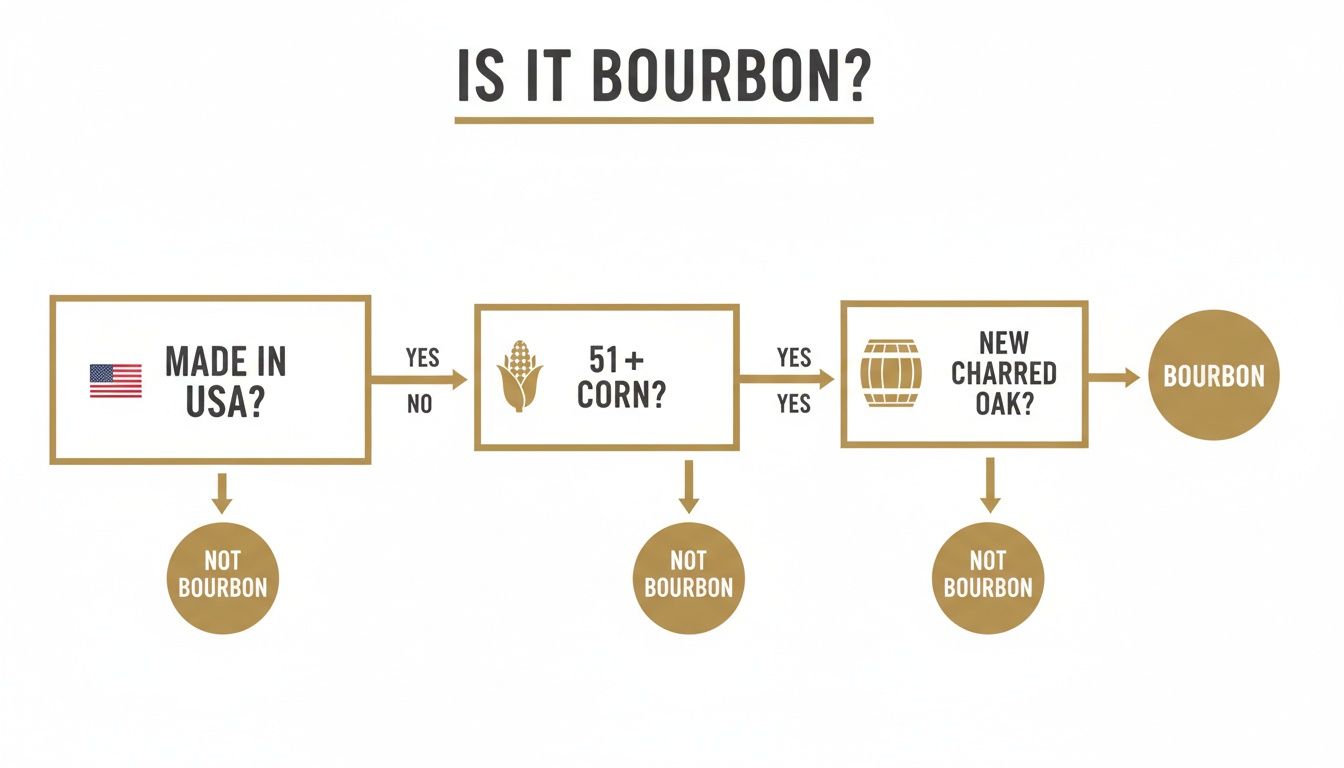
This flowchart really simplifies it. If a whiskey fails to meet any of these core criteria—being made in the USA, from 51%+ corn, and aged in new charred oak—it simply can't be called bourbon.
Rule 5: Controlled Barrel Entry Proof
When the freshly distilled spirit, often called "white dog," is ready to be barreled for aging, it can't go in at a proof higher than 125 (62.5% ABV). This regulation is all about managing the interaction between the spirit and the wood.
A lower entry proof means there's more water in the mix, and water is fantastic at pulling all those sugars and flavors out of the oak. This rule is crucial for developing the deep, complex notes that define a great, well-aged bourbon.
Rule 6: Bottled at a Minimum Strength
Finally, after the bourbon has done its time in the barrel, it has to be bottled at a minimum of 80 proof (40% ABV). Distillers will often add water to bring the spirit down from its high "barrel proof" to a more approachable drinking strength.
This last rule guarantees that any bourbon you buy has a certain level of potency and flavor concentration. While many of us hunt for higher-proof bottles like "barrel proof" or "cask strength" offerings, the 80-proof minimum sets a respectable baseline for the entire category. These six rules, all working together, are what make bourbon such a uniquely delicious and consistent American whiskey.
How Production Rules Shape Flavor Profiles
Those legal definitions that separate bourbon from other whiskeys aren't just technical jargon; they're the recipe. Every single rule, from the corn in the mash to the brand-new barrel it sleeps in, directly shapes the final taste in your glass. Understanding this connection is how you go from just knowing the difference to actually tasting it.
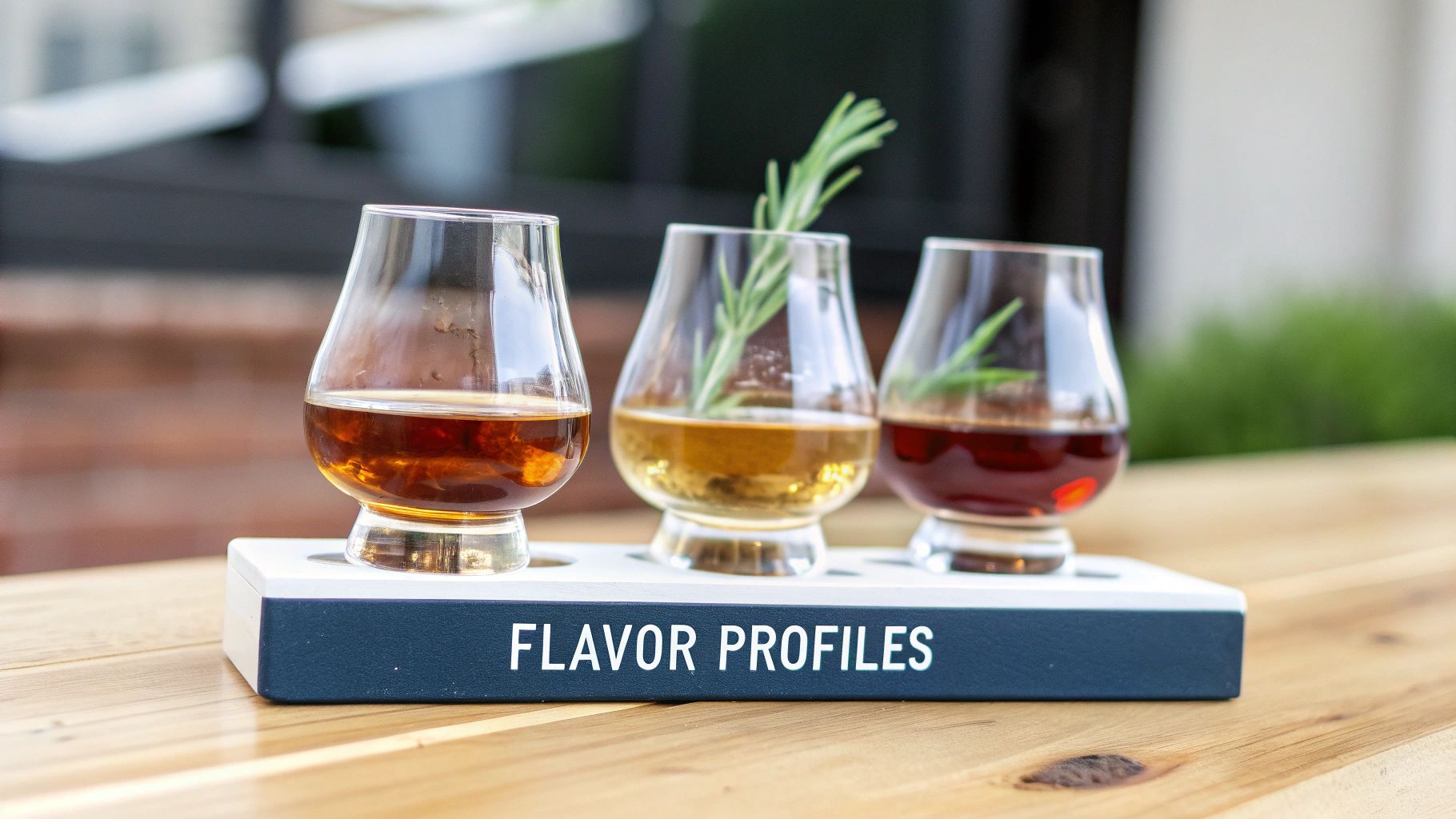
Honestly, this is where the real fun begins. Once you start connecting the dots between production and flavor, you can pinpoint what you like, find the words to describe it, and explore new bottles with confidence.
Bourbon: The Sweet And Full-Bodied American Classic
The heart and soul of bourbon’s classic flavor profile comes from its legally required mash bill: at least 51% corn. Corn is just a naturally sweet grain, and packing so much of it into the recipe gives the final spirit its signature sweet foundation. This is where those quintessential notes of caramel, vanilla, and honey come from.
But the real magic happens in the barrel. The mandate to use new, charred oak barrels is probably the single biggest contributor to bourbon's flavor. As the whiskey rests, it breathes in and out of the wood, pulling out all sorts of delicious compounds that deliver notes of toffee, toasted nuts, and baking spices. To really get into the nitty-gritty of this, our guide on barrel aging whiskey breaks down how the barrel acts as a final, critical ingredient.
For anyone new to this, here's a simple tip: If a whiskey tastes predominantly sweet, with big, bold caramel and vanilla flavors, you're almost certainly tasting a classic bourbon. Use that as your baseline.
You can see this in action with American craft distilleries like Frey Ranch Distillery in Nevada. They use corn grown right on their own farm to create bourbons that are incredibly robust and beautifully sweet, showing how distillers can innovate within a strict set of rules to make something all their own.
Rye Whiskey: Bourbon’s Spicy Counterpart
If bourbon is all about sweetness, rye whiskey is here to bring the spice. To earn the title of American rye, the mash bill has to contain at least 51% rye grain. As a grain, rye is known for imparting a distinctively peppery, spicy, and sometimes even herbal character that stands in stark contrast to corn.
When you're sipping a rye, keep an eye out for notes you won’t typically find in bourbon:
- A Spicy Kick: Think black pepper, clove, and sometimes a cool hint of mint.
- Darker Fruit Notes: Flavors like plum or blackberry often make an appearance.
- Earthy Undertones: A grainy, earthy quality that grounds the spirit and balances the spice.
A fantastic craft example is Sagamore Spirit out of Maryland, which is breathing new life into the state's historic rye whiskey tradition. Their spirits have that signature peppery bite but balance it with smoother notes, making them a perfect entry point into the style. One of the best ways to train your palate is to taste a high-rye bourbon and a true rye whiskey side-by-side; you'll immediately pick up on the grain's influence.
American Single Malt: A World Of Complexity
The American Single Malt category is where the rulebook gets tossed aside, opening the door for an incredible diversity of flavor. Unlike its corn or rye-based cousins, the only major requirement is a mash bill of 100% malted barley from a single distillery. The aging rules are far more flexible, too, allowing for new or used barrels.
This freedom creates a massive spectrum of flavor profiles. You might find an American Single Malt that’s light, grassy, and floral, while the next one is rich and chocolatey, or even smoky if the distillery uses peated malt. Westland Distillery in Seattle is a true pioneer here, using unique, locally sourced barley to craft complex whiskeys with notes of fruit, nuts, and dark chocolate.
A Practical Flavor Comparison
Sometimes, seeing the differences laid out helps cement them in your mind. This table gives you a snapshot of the typical tasting notes you'll find in each style—a great cheat sheet for your next blind tasting.
Typical Flavor Profiles: Bourbon vs Other American Whiskeys
| Flavor Note | Bourbon | Rye Whiskey | American Single Malt |
|---|---|---|---|
| Sweetness | High (Caramel, Vanilla, Honey) | Moderate (Toffee, Dark Fruit) | Varies (Fruity, Malty, Honey) |
| Spice | Moderate (Cinnamon, Nutmeg) | High (Black Pepper, Clove, Mint) | Low to Moderate (Baking Spice) |
| Body | Full, often creamy and rich | Medium, can be sharp and assertive | Varies from light to full-bodied |
| Common Notes | Toasted Oak, Cornbread, Butterscotch | Herbal, Earthy Grains, Anise | Chocolate, Coffee, Orchard Fruit, Smoke |
Knowing how the rules of production dictate flavor is the most powerful tool in your tasting arsenal. It turns drinking into an active, engaging exploration. So next time you pour a glass, ask yourself what you’re tasting. Is it the sweet, comforting embrace of bourbon, the bold, spicy punch of rye, or the complex, unfolding story of an American Single Malt? Your palate already knows the answer.
Getting Your Bearings in the Modern American Whiskey Scene
Figuring out the difference between whiskey and bourbon goes beyond just the rulebook; it’s about understanding the wild, exciting world of the American market today. The last couple of decades have been a real boom time for American whiskey, completely changing what you see on the shelf and how you should approach buying a bottle. At the heart of this shift is a move toward premiumization—basically, drinkers are no longer settling for just anything and are actively seeking out spirits with more character and higher quality.
This wave of enthusiasm has kicked off a full-blown craft distillery explosion. Small, independent producers are firing up stills all across the country, each adding their own local twist to time-honored recipes. For anyone looking to explore, this is fantastic news. It means there's more variety, innovation, and flat-out interesting whiskey available now than at any other point in history.
The Craft Whiskey Gold Rush
The market's growth has been staggering, to say the least. U.S. whiskey sales shot up from around $1.3 billion in 2003 to a whopping $5.27 billion in 2023. That's a 300% jump in just twenty years. Drilling down, the high-end American whiskey category—which includes your premium bourbons—has surged by over 190% in the last decade alone. The distilleries have been working overtime to keep up, with Kentucky's bourbon production rocketing up by 475% between 1999 and 2022. As you might imagine, some analysts are now wondering if a bubble is about to burst, as you can read in this detailed market analysis.
So, what does all this mean for you, the person holding the glass? Simply put: you have more choices and a better shot at finding incredible value. The crowded field forces distilleries to fight for your attention not with flashy ads, but with truly exceptional spirits that can stand on their own.
For new whiskey drinkers, this crowded market is a huge advantage. It means hidden gems from smaller, passionate distilleries are waiting to be discovered—often at a better value than the big, hyped-up brands. The key is knowing how to find them.
This is exactly why a focused, unbiased tasting is so valuable. When you strip away the marketing and let the whiskey do the talking, you get to the heart of what really matters: the flavor.
Finding Quality in a Crowded Market
Walking into a liquor store and seeing a wall of thousands of different whiskeys can be a bit much. The big brands with their massive marketing budgets tend to soak up all the attention, but very often, the most memorable and well-made whiskeys come from smaller producers you’ve probably never heard of.
So, how do you find the good stuff? Here are a few tips to help you cut through the noise:
- Look Beyond Kentucky: Kentucky is the spiritual home of bourbon, no doubt. But incredible American whiskeys are now being made in almost every state. Distillers in places like Texas, Colorado, and New York are using their local grains and unique climates to create whiskeys with a genuine sense of place. A brand like Wyoming Whiskey, for example, produces wheated bourbons with a distinct character shaped by the Bighorn Basin.
- Embrace the Blind Tasting: This is the single best way to figure out what you truly like. When you remove the label, the price tag, and any preconceived notions, you let your palate lead the way. A blind tasting often proves that your favorite pour isn't the most expensive one, but the one that simply tastes the best to you.
- Follow the Story: Craft distilleries are often built on passion. Many are family-run operations, use local farm-to-bottle ingredients, or are dedicated to reviving old-school distilling methods. Getting to know the people and the process behind the bottle adds a whole new layer of appreciation to what’s in your glass.
The American whiskey market right now is an explorer’s paradise. If you understand what's happening in the industry and adopt a curious, taste-first mindset, you can move past the obvious choices and start discovering the incredible depth and quality that craft whiskey has to offer.
A Beginner's Guide to Tasting and Serving
Knowing the difference between whiskey and bourbon is one thing, but actually experiencing it? That’s where the fun really begins. It’s time to put all that newfound knowledge to the test and learn how to properly taste and serve these incredible American spirits.
This isn't about getting stuffy or following some complicated ritual. It’s about getting the most enjoyment out of your glass and training your palate to notice the subtle cues that make every single bottle unique.
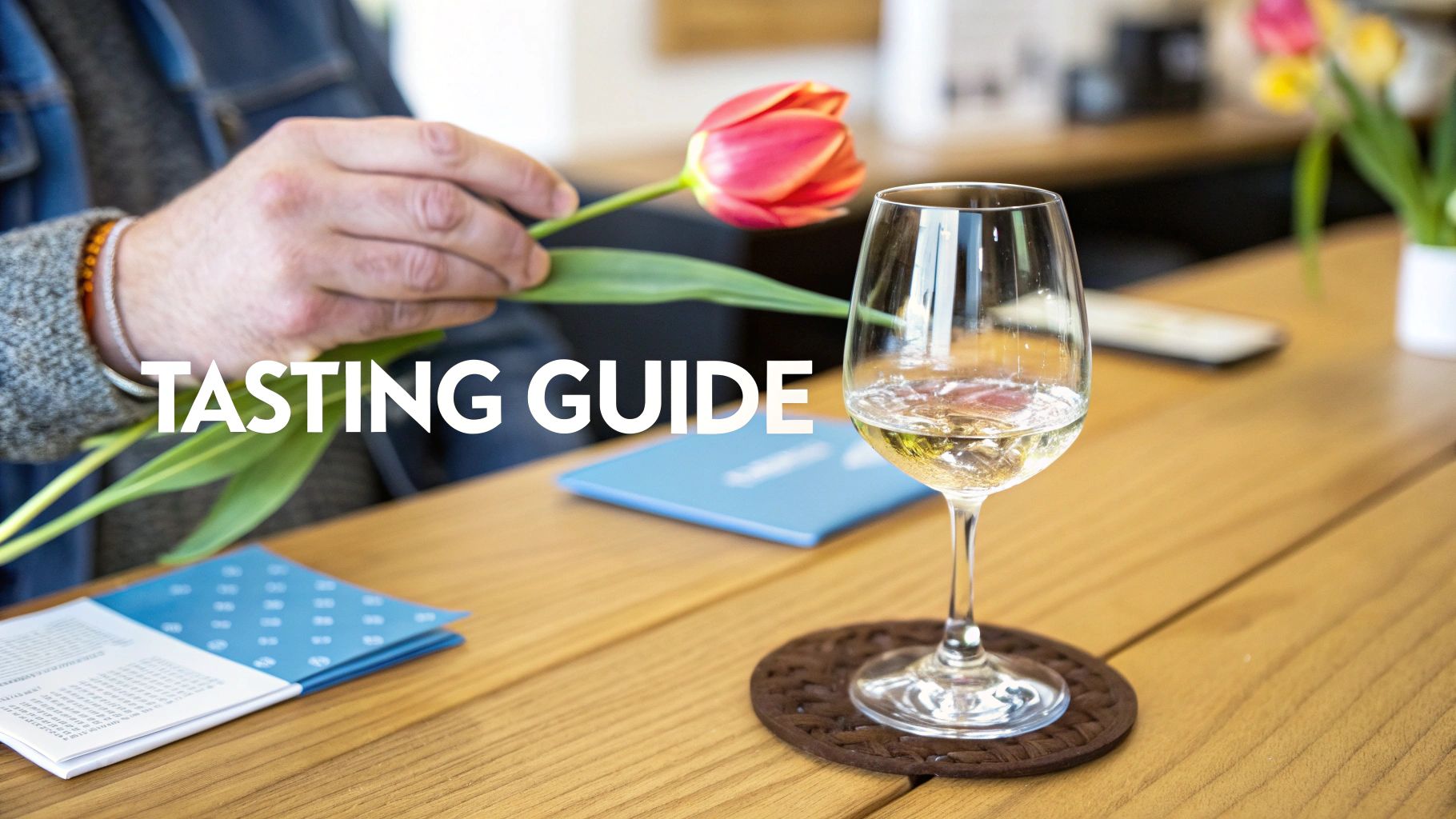
First things first, let’s set you up for success. That starts with the right glass. A tulip-shaped glass, like the classic Glencairn, is your best friend here. Its curved bowl is designed to concentrate aromas, funneling them straight to your nose for a much more intense sensory experience.
How to Taste Like an Expert
Tasting whiskey is a simple, multi-step process that engages all your senses. It’s the best way to get past that initial hit of alcohol and uncover the complex layers of flavor hiding inside.
- Look at the Color: Hold your glass up to the light. The color, which can range from a pale straw to deep mahogany, tells a story about the whiskey's age and the type of barrel it rested in. A darker hue often points to more time spent in new, charred oak—a signature of many bourbons.
- Nose the Spirit: Gently swirl the whiskey and bring the glass toward your nose, but keep your mouth slightly open. Take small, gentle sniffs to avoid overwhelming your senses with ethanol. Try to pick out the primary aromas. Is it sweet like caramel, spicy like rye, or fruity like baked apples?
- Take the First Sip: Your first sip should be a small one. Just enough to coat your tongue and get your palate used to the proof. This is what some call the "Kentucky Chew," where you swish the liquid around your mouth for a moment to prepare for the real tasting.
- The Second Taste: Now, take a slightly bigger sip and let it rest on your tongue. Really pay attention to how the flavors evolve. Can you taste that distinct sweetness from the corn in a bourbon? Or maybe the peppery spice from a rye-forward American whiskey?
This methodical approach turns simple drinking into an active tasting. For a more detailed walkthrough, our complete guide on how to taste whiskey lays out the step-by-step process to build your confidence and refine your palate.
The Great Debate: Water or Ice?
So, should you add water or ice to your whiskey? The simple answer is this: drink it however you enjoy it most. That said, each addition serves a very different purpose.
A few drops of room-temperature water can be a total game-changer, especially for higher-proof whiskeys. It slightly lowers the alcohol content, which can tame the "burn" and allow more subtle flavors and aromas to pop. Ice, on the other hand, chills the whiskey. This can mute some of its complexity but makes for a wonderfully refreshing sip on a warm day.
Beginner's Tip: Always try your whiskey neat first. Then, add a single drop of water, taste it again, and repeat the process. You'll be amazed at how the flavor profile can shift and open up with just a tiny bit of dilution.
Simple Pairings and Cocktails
Once you’re comfortable tasting, you can start exploring how whiskey plays with food and other ingredients. The sweet, robust profile of bourbon, for example, makes it a natural for classic American cocktails and some seriously good food pairings.
Bourbon in Cocktails:
- Old Fashioned: Bourbon is the traditional go-to for a reason. Its rich notes of caramel and vanilla are a perfect match for the sugar and bitters.
- Whiskey Sour: The full body of a bourbon stands up beautifully to the bright, citrusy punch of lemon juice.
Whiskey Pairings:
- Bourbon’s inherent sweetness is a fantastic counterpoint to salty, savory foods like aged cheddar, smoked meats, or even a piece of rich dark chocolate.
- Spicier rye whiskeys are incredible with rich, fatty foods like pâté or cured sausages, as that spicy kick cuts right through the richness.
Ultimately, this whole journey is about discovering what you enjoy, one sip at a time.
Putting a Few Common Questions to Rest
Even after you get the rules down, a few questions always seem to hang around for folks new to the whiskey world. It’s totally normal. Think of this as your quick-reference guide to clear up that last bit of confusion and really nail down the difference between whiskey and bourbon.
Getting these details straight is what turns general knowledge into genuine expertise. It helps you navigate conversations at the tasting bar, read labels with more confidence, and ultimately, make smarter choices when you're buying a bottle. Let's tackle some of the most common ones head-on.
Does Bourbon Have to Be from Kentucky?
This is easily one of the biggest myths in the entire whiskey universe. The short answer? Absolutely no.
While Kentucky is undeniably the historic and spiritual heart of bourbon—cranking out around 95% of the world's supply—the only geographical requirement is that it must be made in the United States. Period.
This single rule has opened the door for an incredible craft whiskey scene to boom across the entire country. You can find exceptional, award-winning bourbons from distilleries in states like Texas, New York, Colorado, and Nevada. Brands like Frey Ranch Distillery, for instance, are making world-class bourbon using grains grown on their own Nevada farm, proving that great bourbon knows no state lines.
Is All American Whiskey Bourbon?
Definitely not. It's easy to get them mixed up, but bourbon is just one specific, legally defined style of American whiskey. The United States produces a huge variety of other whiskey types, and each one has its own rulebook and distinct flavor profile.
Other major American whiskey categories include:
- Rye Whiskey: Must contain at least 51% rye in its mash bill, which gives it that classic spicy, peppery character.
- American Single Malt Whiskey: Made from 100% malted barley at a single distillery, this category offers a massive range of complex, evolving flavors.
- Tennessee Whiskey: This is essentially bourbon that undergoes an extra step before aging—the Lincoln County Process—where the new spirit is filtered through charcoal. This mellows it out and gives it a signature smoothness.
Understanding this helps explain why the American whiskey aisle is so diverse. Each style offers a completely different experience based on its primary grain and production method.
Why Do Some Whiskeys Have an "E" and Others Don't?
The spelling difference—whiskey versus whisky—is all about regional tradition. There's no right or wrong way, but it's a great clue that often signals the spirit's country of origin.
As a general rule of thumb, countries with an "E" in their name (United States, Ireland) tend to use the "whiskey" spelling. Countries without an "E" (Scotland, Canada, Japan) typically opt for "whisky."
This isn't a hard-and-fast rule, but it’s a surprisingly reliable guideline. So when you see a bottle of American bourbon, you can bet it will be spelled "whiskey."
Is Expensive Bourbon Always Better?
Not even close. While price can sometimes hint at age, rarity, or a special finish, it is never a guarantee of quality. The modern market is full of hype and secondary-market craziness that often has very little to do with the actual liquid in the bottle.
Tip for new drinkers: Don't assume a higher price tag means better taste. Many affordable bottles from craft distilleries will easily beat expensive, mass-marketed ones in a blind taste test. Trust your palate, not the price.
This is exactly why blind tasting is so powerful. It strips away all the brand bias and price perception, forcing you to focus only on what matters: the aroma, flavor, and finish. More often than not, you’ll discover that your favorite pour isn't the most expensive one on the table—it's simply the one that tastes best to you.
Ready to discover your next favorite American craft whiskey without the bias? Blind Barrels delivers a curated, blind tasting experience to your door every quarter. You'll explore top-shelf samples from incredible small distilleries, train your palate, and find out what you truly enjoy. Start your tasting adventure at https://www.blindbarrels.com.